Suzhou: planned industrial parks in the Yangtze Delta
The industrial character of Suzhou was designed rather than inherited. Large planned parks, several developed with foreign partners, gave incoming manufacturers serviced land, utilities and a single administrative counterparty at a moment when that was rare. Electronics assembly, semiconductor packaging, precision machinery, medical devices and process chemicals all took up space on that basis. The city therefore reads more like an industrial estate at metropolitan scale than an organically grown factory town.
- Hub type
- industrial city
- Country
- China
- Location
- Suzhou sits in southern Jiangsu province on the Yangtze Delta plain, a short surface journey west of Shanghai and within reach of both that city port and its airports.
- Logistics connections
- river port on the Yangtze handling feeder and bulk traffic, road access to deep-water container terminals near the estuary, shared use of a neighbouring international cargo airport, dense expressway network across the delta, high-speed and conventional rail on the coastal corridor
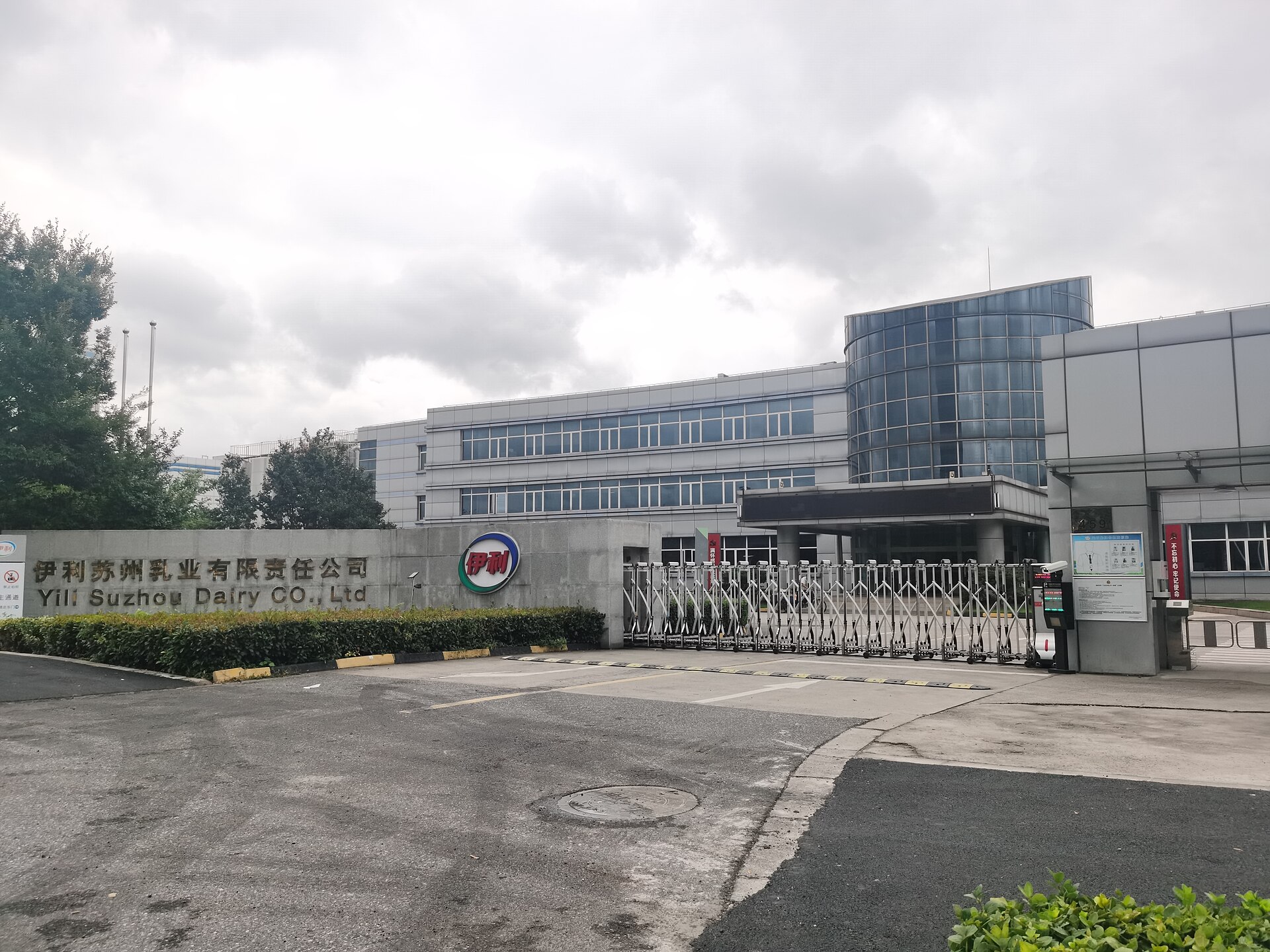
Serviced land as an industrial strategy
The parks here were built before the tenants arrived: power, water, effluent treatment, customs facilities and factory shells were provided as a package, and approvals ran through park administrations rather than a scattered bureaucracy. That lowered the entry cost for foreign manufacturers enough to draw in electronics and precision engineering at scale, particularly from Taiwan, Japan and Korea. The legacy is a supplier base whose habits were formed inside multinational systems, including documented processes, measurement discipline and English-language paperwork. It also means the industrial geography is legible: activity clusters by park, and a buyer can usually tell a great deal from which park a supplier sits in.
Electronics, precision engineering and process plants side by side
Three distinct industrial logics coexist. Electronics assembly and semiconductor back-end work brought cleanrooms, static control and high-mix scheduling. Precision machinery and medical device production brought metrology, validation and small-batch discipline. Chemical and materials plants brought permitted infrastructure and process safety obligations. They rarely trade with each other, but together they support shared services such as calibration laboratories, analytical testing, specialist maintenance and cleanroom construction that a single-sector town cannot sustain. For a manufacturer weighing a site, that supporting layer is often decisive, because it determines how quickly a problem can be diagnosed without flying someone in.
Skills built inside foreign-invested plants
The technical workforce here was largely trained on the job by multinationals, and it shows in what is easy and what is hard. Running a defined process to a written specification is routine, and so is passing a customer audit. Originating a process, or improvising when a specification does not cover a situation, is less consistently strong, because the surrounding system was designed to remove that discretion. Graduate engineering intake comes from universities across the province and from the neighbouring metropolis, and competition for experienced quality and equipment engineers is intense enough that retention plans are a normal part of a site investment case.
Moving goods without owning the port
The city has river frontage and a working port, but its ocean freight moves mainly through terminals in the neighbouring municipality, reached by road or by feeder barge. That dependency is usually unproblematic and occasionally acute, because congestion, weather closures or administrative disruption at the estuary terminals propagate here with no local alternative. Air cargo is likewise borrowed rather than owned. Manufacturers of high-value, time-sensitive goods generally accept this because the surface distance is short and predictable; those shipping heavy or bulky items pay more attention to the barge option, which is cheaper and slower but insulated from road congestion.
What changes when a programme moves here from the south
Buyers relocating work from the Pearl River Delta notice differences beyond geography. Component markets are thinner, so brokered sourcing of the kind common in the south is less available and lead times are planned rather than improvised. Minimum order quantities tend to be higher because plants are larger and built around scheduled runs. Documentation is generally better, and so are the prices. The net effect is a base that suits stable, specified, audited production and suits fast iteration less well. Programmes that need both often keep development in the south and move volume here once a design is frozen.
Industrial sectors present
- electronics assembly
- semiconductor
- precision machinery
- medical device
- chemicals
- textiles
- solar panel
Frequently asked questions
- Why do so many foreign-invested plants sit in Suzhou rather than in the city next door?
- Serviced industrial land, simpler administration and lower occupancy cost, without giving up access to the port, the airports or the technical labour market. The parks were set up specifically to reduce the friction of establishing a plant, and once a critical mass of electronics and precision manufacturers arrived, the suppliers, laboratories and contractors followed them. Staying close to the metropolis while paying less to occupy space is the whole proposition.
- Does the city have real semiconductor capability or only assembly?
- Its established strength is in back-end work such as packaging and testing, along with the related equipment and materials supply, and electronics assembly that consumes those outputs. Front-end wafer fabrication exists in the wider delta region as well, but a buyer should verify what a specific site actually performs rather than assuming the whole chain is local. The distinction matters for lead times, for qualification effort and for how exposed a programme is to equipment and materials import controls.
- How exposed is a plant here to disruption at the coastal terminals?
- Moderately, and the exposure is worth planning for explicitly. Since ocean freight leaves through terminals in a neighbouring municipality, a closure or a severe congestion event there affects shipments from here with no nearby substitute. The usual mitigations are holding a buffer of finished goods for export customers, keeping a barge or river-port routing qualified rather than theoretical, and agreeing with customers in advance who bears the cost when a vessel is missed.
Data limitations
- Manufacturing figures are operator-supplied inputs, not market data. GeoBusinessIQ holds no factory costs, production volumes, yields, cycle times, tooling prices or capacity data and does not estimate them — every result reflects only the figures you enter.
- No manufacturer, supplier, vendor or factory is recommended, rated or ranked anywhere in this cluster, and no directory of them is published. Selection material describes how to run your own assessment; the assessment itself remains yours.
Explore the graph
Industries present
- Back-end packaging and test: paid by the second on a tester
- Commodity chemicals manufacturing: continuous plants, feedstock spreads and turnaround discipline
- Contract board assembly: clear-to-build, line hours and the handover pack
- Fab tools: build-to-order machines carrying a service annuity
- Medical device manufacturing: design controls decide when you are allowed to sell
- Module assembly: a commodity line sold on a long warranty promise
Sources
- National Bureau of Statistics of China — NBS China (accessed )Covers: Official Chinese statistics including industrial output and industry structure.Does not cover: Forecasts, company-level data, or plant-level figures.Why it matters: Cited as the official statistical authority for structural statements about Chinese industry.Review cadence: annual
- United Nations Industrial Development Organization — UNIDO (accessed )Covers: Industrial development analysis, industrial statistics methodology, and manufacturing capability programmes across member states.Does not cover: Company-level data, factory costs, supplier information, or real-time production statistics.Why it matters: The United Nations agency for industrial development; used for structural framing of how manufacturing sectors develop, never for point figures.Review cadence: annual
- OECD — OECD — economic and tax statistics (accessed ; reviewed )Covers: Comparable corporate tax, statutory rate, and economic indicators across member and partner economies.Does not cover: Effective tax rates, deductions and incentives, local surtaxes, and personal residency rules.Why it matters: Used as a cross-country baseline to sanity-check rates against primary tax-authority figures.Review cadence: Annual, plus on major statutory changes.
Educational and operational information only. This page describes an industrial location qualitatively; it publishes no output, employment, plant-count or ranking figures, names no individual manufacturer as a recommendation, and is not investment, siting, legal, or tax advice.
Last updated: