Milan: machinery, chemicals and design-led production in Lombardy
Milan itself contains comparatively little heavy production; the manufacturing sits in a ring of provinces around it and is coordinated from the city. Machinery and packaging equipment, chemicals and pharmaceuticals, printing, furniture and fashion production all draw on that arrangement, where design, sales, finance and technical management concentrate centrally while fabrication is dispersed. Treating the city and its belt as one industrial system is the only way the place makes sense.
- Hub type
- industrial city
- Country
- Italy
- Location
- Milan is the capital of Lombardy in northern Italy, on the Po plain between the Alpine foothills and the river, with manufacturing spread through the surrounding provinces.
- Logistics connections
- intercontinental air cargo capacity at the regional airports, motorway crossroads connecting the Alpine passes and the Po valley, rail freight corridors through the Alpine base tunnels, road and rail access to the Ligurian container ports, inland intermodal terminals across the surrounding provinces
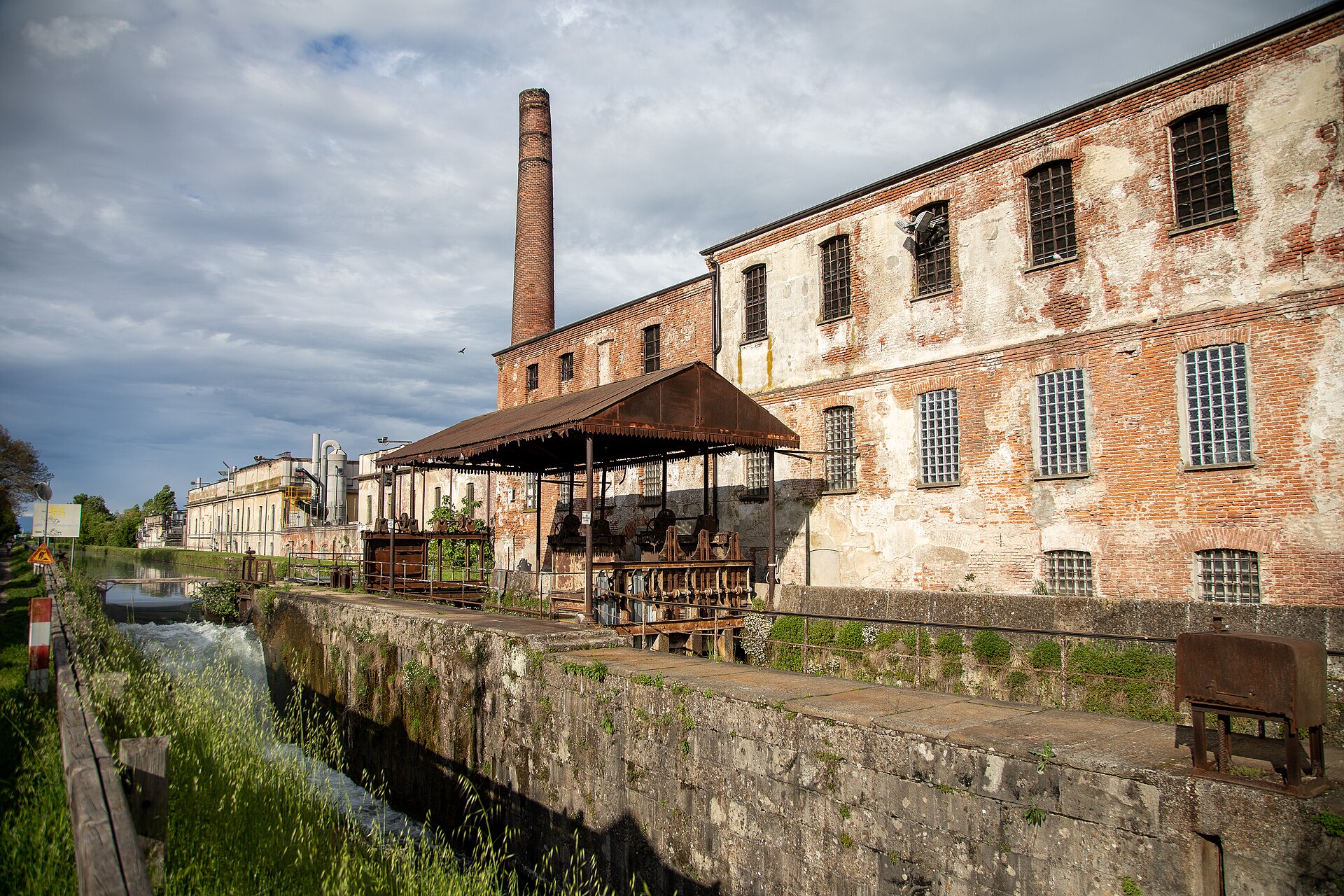
A commercial centre with production around it
Industry here organised itself as a division of labour across a metropolitan region rather than inside a city. Head offices, design studios, engineering departments, trade fairs and financing sit in the centre; the provinces around it hold machine shops, moulders, foundries, printers, furniture makers and chemical plants. The pattern developed because land and labour were available outside while customers, capital and specification skills concentrated within. This has a practical consequence for a buyer: the company signing a contract and the plant making the product are frequently in different provinces, and the quality of the second matters more than the address of the first.
Machinery built for someone else process
The characteristic Lombard manufacturer builds equipment that other manufacturers use, including packaging lines, food processing machinery, textile and printing equipment, plastics machinery and industrial automation. These are engineered-to-order businesses with small serial runs, heavy application engineering content and long customer relationships. Buying from them resembles commissioning a project more than placing an order, since specification, acceptance criteria, factory testing and after-sales service determine the outcome, and price comparisons between suppliers are frequently comparisons between different scopes. Firms that treat such a purchase as a commodity tender usually discover the difference during commissioning, and spare parts coverage deserves as much attention as the machine.
Chemistry and pharmaceuticals in the surrounding provinces
Fine chemicals, active ingredient production, contract pharmaceutical manufacturing and cosmetics production form a substantial and often overlooked part of the regional base. Much of it is contract work carried out for brand owners elsewhere, operating under external inspection and requiring documented processes, validated equipment and analytical laboratories. The workforce for it comes from technical institutes and universities in the region. For a buyer, the important distinction is between a site that holds its own manufacturing authorisation and one that performs a step under someone else authorisation; the two look similar from outside and carry different responsibilities. Verifying which applies is straightforward and rarely done.
Design as a manufacturing input
Furniture, lighting, fashion and product design are treated here as industrial functions rather than creative decoration, and the supplier base reflects that. Model makers, prototype workshops, surface finishers, small-batch upholsterers and specialist metalworkers exist because designers and producers work in close physical contact. The effect is that a product can move from a drawing to a presentable sample quickly, which is why brands maintain development activity in the region even when volume production happens elsewhere. The limitation is scale, since this is a base built for variety and finish quality rather than long uninterrupted runs. Buyers wanting both usually split the work geographically.
Congestion, land and the cost of proximity
The advantages of the region create its constraints. Industrial land in the inner provinces is expensive and contested with residential and logistics uses, motorway corridors are heavily loaded, and air quality regulation in the Po basin restricts some industrial emissions and vehicle movements. Firms respond by pushing new capacity outward into cheaper provinces while retaining engineering and commercial functions centrally. For anyone evaluating a site, the useful comparison is not city against region but inner belt against outer belt, because the difference in occupancy cost and in access to labour between them is substantial. Both retain access to the same ports and airports.
Industrial sectors present
- machinery
- industrial equipment
- chemicals
- pharmaceutical
- printing
- furniture
- packaging
Frequently asked questions
- Why is so much Italian machinery production concentrated around this city?
- A long accumulation of engineered-to-order businesses, supported by the machine shops, foundries and control specialists they buy from, and by a commercial centre that gave them access to customers and finance. Packaging, food processing, textile and plastics machinery all developed this way, typically in small firms with deep application knowledge in a narrow field. The concentration persists because the supplier network and the engineering labour market are local and difficult to reconstruct elsewhere.
- What does buying engineered-to-order equipment from here involve?
- A project rather than a purchase. The specification, acceptance testing at the works of the builder, installation support, operator training, spare parts provisioning and service response all sit inside the commercial agreement, and suppliers differ widely in what they include. Comparing headline prices without normalising scope is the usual mistake. Buyers who define acceptance criteria and performance testing in writing before ordering get far better outcomes than those who negotiate them during commissioning.
- Is production in the surrounding provinces genuinely part of the same base?
- Yes, and treating it separately gives a false picture. Foundries, moulders, printers, furniture makers and chemical plants across the neighbouring provinces supply and are coordinated by firms based centrally, and workers, engineers and subcontractors move across the whole area routinely. A supplier quoting from a city address may well produce a substantial distance away. Auditing the production site rather than the registered office is the practical response.
Data limitations
- Manufacturing figures are operator-supplied inputs, not market data. GeoBusinessIQ holds no factory costs, production volumes, yields, cycle times, tooling prices or capacity data and does not estimate them — every result reflects only the figures you enter.
- No manufacturer, supplier, vendor or factory is recommended, rated or ranked anywhere in this cluster, and no directory of them is published. Selection material describes how to run your own assessment; the assessment itself remains yours.
Explore the graph
Industries present
- Agricultural machinery manufacturing: building all year for a season that will not wait
- Blow moulding: why bottle plants migrate towards the filling line
- Commercial printing: makeready, overcapacity and the run-length crossover
- Commodity chemicals manufacturing: continuous plants, feedstock spreads and turnaround discipline
- Corrugated boxes: a delivery-radius business built around one enormous machine
- Flexible packaging converting: print, laminate, slit, and the waste between jobs
Sources
- Italian Ministry of Enterprises and Made in Italy — MIMIT (accessed )Covers: Italian industrial policy, enterprise programmes and industrial sector information.Does not cover: Company-level data, or decisions on a specific application.Why it matters: Cited on Italian industrial hub pages for the national industrial policy environment.Review cadence: annual
- Italian Trade Agency — ITA Italy (accessed )Covers: Italian trade promotion, including industrial district and sector profiles.Does not cover: Company-level data, or commercial introductions.Why it matters: Cited on Italian industrial hub pages for district and sector composition.Review cadence: annual
- Eurostat — Eurostat — official statistics of the European Union (accessed ; reviewed )Covers: EU-harmonised VAT rates and economic statistics for EU/EEA member states.Why it matters: Used for EU VAT and member-state economic figures where an EU-harmonised series is preferable.
Educational and operational information only. This page describes an industrial location qualitatively; it publishes no output, employment, plant-count or ranking figures, names no individual manufacturer as a recommendation, and is not investment, siting, legal, or tax advice.
Last updated: