Manchester: chemicals, materials and food production in the North West
Manufacturing in Manchester today has little to do with the cotton trade that built the city, though the chemical industry that dyed and finished cloth is the direct ancestor of what remains. Speciality chemicals, coatings, technical textiles, food and beverage production, packaging and plastics processing form the working base, with a materials research presence attached to the universities. Production is dispersed across the surrounding towns rather than inside the city.
- Hub type
- industrial city
- Country
- United Kingdom
- Location
- Manchester lies in North West England on the plain east of the Pennines, with industry spread through the surrounding towns and along the ship canal toward the Mersey estuary.
- Logistics connections
- ship canal with inland container terminals reaching the city, international airport with substantial freight handling, motorway network linking the northern conurbations, rail freight terminals and access to the west coast corridor, road access to a deep-sea container port on the nearby estuary
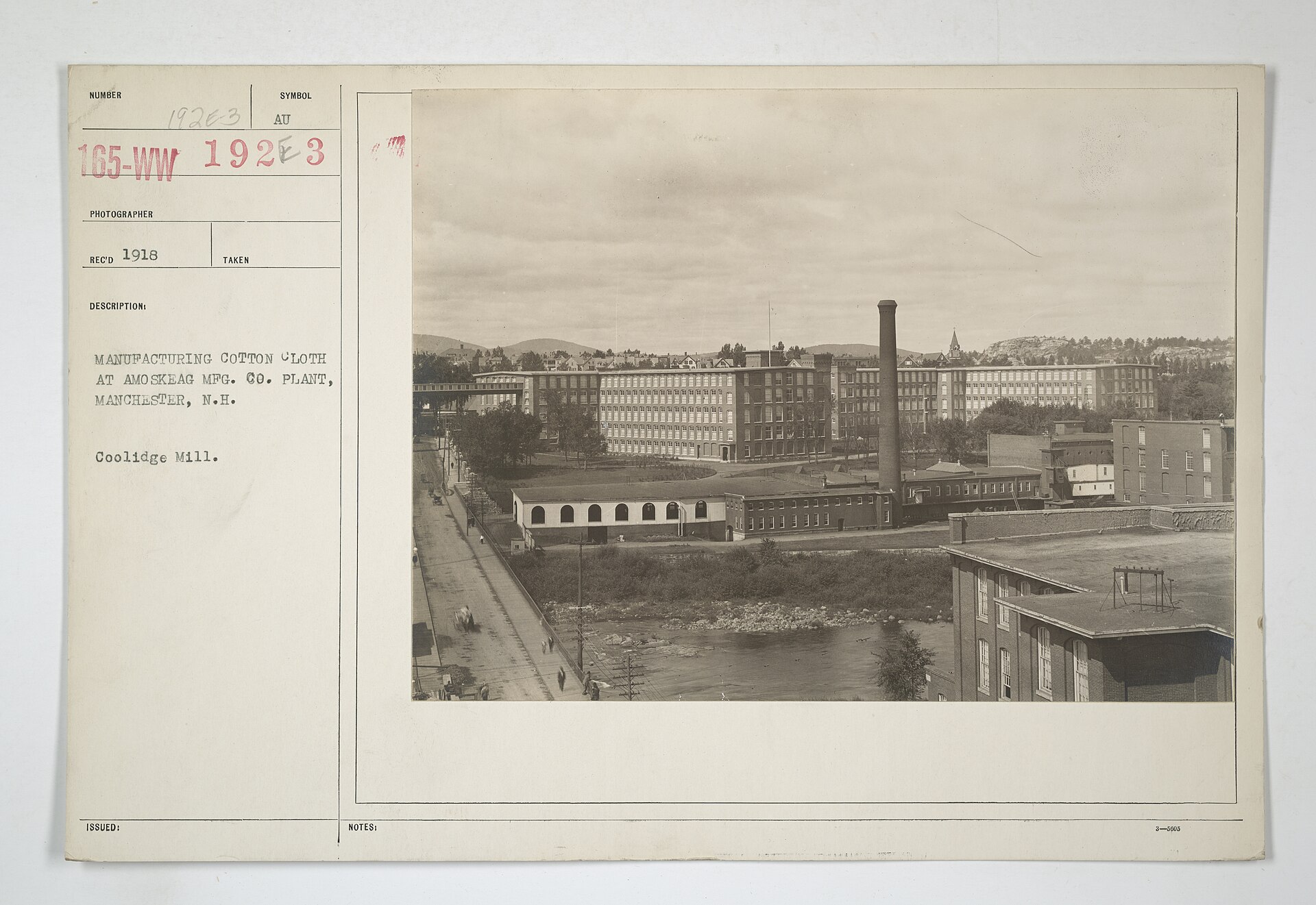
Chemistry as the surviving inheritance
Textile finishing needed bleaches, dyes, soaps and solvents, and the industry that supplied them outlived its customer. What remains is a speciality and fine chemicals sector making coatings, adhesives, surfactants, pigments, water treatment products and intermediates, spread across sites in the surrounding towns. These are documentation-heavy businesses operating under substance regulation and process safety regimes, employing chemists and process operators rather than assembly labour. The region is therefore a credible source of formulated products and intermediates, and a much less obvious source of discrete manufactured goods, which mostly went elsewhere generations ago. The distinction is worth holding onto when reading regional promotion.
Food and drink at industrial scale
Food and beverage production accounts for a substantial share of manufacturing employment across the North West, covering baking, dairy, prepared meals, confectionery, snacks and brewing. It is capital-intensive, tightly regulated, and driven by retailer specifications and short shelf lives rather than by export markets. Plants run continuous or near-continuous shifts, depend heavily on hygienic design and cleaning regimes, and buy processing and packaging equipment from specialist suppliers who are frequently not local. The sector is a substantial customer for local engineering, maintenance and packaging firms, and recruitment for shift operating roles is its standing difficulty.
Research links that reach production unevenly
The universities here carry serious materials, chemistry and engineering research, including advanced materials work that receives considerable public attention. Translating that into local manufacturing has been partial: spin-outs, pilot facilities and specialist small firms exist, but volume production of new materials often happens elsewhere or not at all. This is a common pattern and worth stating plainly rather than overselling. What the research base does reliably provide is analytical capability, testing services and access to specialists, which is genuinely useful to established manufacturers solving process problems. Firms treating it as a service resource get more from it than firms expecting a technology transfer pipeline.
The canal, the airport and the estuary
Freight here has an unusual shape. A ship canal allows smaller vessels and barges to reach inland terminals close to the city, which suits bulk and containerised flows that would otherwise be trucked from the coast. A deep-sea container terminal on the nearby estuary handles ocean traffic, giving the region a coastal port at shorter road distance than most inland English industry enjoys. The airport carries a significant volume of freight, useful for pharmaceutical, electronics and perishable consignments. Motorways link the northern conurbations, and rail freight uses the west coast corridor. For exporters the combination is comparatively favourable.
Industrial land, energy and the practical constraints
Available industrial land is fragmented, with much of the best-connected space taken by distribution warehousing that competes directly with manufacturing for sites and for labour. Older industrial estates carry contamination history from the chemical past, which affects redevelopment cost. Electricity connection capacity has become a live constraint in parts of the region for energy-intensive processes, and process heat decarbonisation is an unresolved question for chemical and food plants alike. None of these prevent manufacturing investment, but they lengthen the programme and mean site selection has to start from utilities and consents rather than from floor area and rent.
Industrial sectors present
- specialty chemicals
- food
- beverage
- packaging
- plastics
- textiles
- electrical equipment
Frequently asked questions
- What does Manchester actually manufacture now?
- Mainly formulated chemical products, food and drink, packaging, plastics and technical textiles, alongside electrical and engineering firms serving those sectors. Production is spread across the surrounding towns rather than concentrated in the city centre, and much of it supplies domestic customers under retailer or industrial specifications. Discrete engineering and consumer goods manufacturing is present but far less prominent than the industrial history of the region leads people to expect.
- Is the advanced materials research a practical resource for manufacturers?
- As a service, yes; as a source of production technology, less predictably. University laboratories and associated institutes offer characterisation, testing and specialist expertise that most firms cannot justify owning, and manufacturers use them to diagnose process problems and qualify materials. Expecting a direct pipeline from published research into local volume production is a more optimistic reading than the record supports, and firms are better served by treating the relationship as technical support.
- How good is the freight position for an exporter here?
- Better than most inland English locations. A deep-sea container terminal sits on the nearby estuary at short road distance, inland waterway terminals handle some containerised and bulk traffic, and the airport carries meaningful cargo volumes for high-value goods. Rail freight connects to the main north-south corridor. The practical limitation is road congestion on the urban motorway sections, which affects scheduling more than cost for time-sensitive shipments.
Data limitations
- Manufacturing figures are operator-supplied inputs, not market data. GeoBusinessIQ holds no factory costs, production volumes, yields, cycle times, tooling prices or capacity data and does not estimate them — every result reflects only the figures you enter.
- No manufacturer, supplier, vendor or factory is recommended, rated or ranked anywhere in this cluster, and no directory of them is published. Selection material describes how to run your own assessment; the assessment itself remains yours.
Explore the graph
Industries present
- Beverage manufacturing: the filler is the business
- Blow moulding: why bottle plants migrate towards the filling line
- Corrugated boxes: a delivery-radius business built around one enormous machine
- Electrical equipment makers: wound products, type tests and efficiency rules that rewrite catalogues
- Flexible packaging converting: print, laminate, slit, and the waste between jobs
- Food manufacturing: perishable inputs, retailer promotions and the allergen changeover
Sources
- United Kingdom Department for Business and Trade — UK DBT (accessed )Covers: United Kingdom business, industrial and trade policy, including product regulation and manufacturing support.Does not cover: Determinations for a specific product, or company-level data.Why it matters: The department that owns UK business and product-regulation policy; cited for the UK manufacturing environment.Review cadence: annual
- OECD — OECD — economic and tax statistics (accessed ; reviewed )Covers: Comparable corporate tax, statutory rate, and economic indicators across member and partner economies.Does not cover: Effective tax rates, deductions and incentives, local surtaxes, and personal residency rules.Why it matters: Used as a cross-country baseline to sanity-check rates against primary tax-authority figures.Review cadence: Annual, plus on major statutory changes.
- United Nations Industrial Development Organization — UNIDO (accessed )Covers: Industrial development analysis, industrial statistics methodology, and manufacturing capability programmes across member states.Does not cover: Company-level data, factory costs, supplier information, or real-time production statistics.Why it matters: The United Nations agency for industrial development; used for structural framing of how manufacturing sectors develop, never for point figures.Review cadence: annual
Educational and operational information only. This page describes an industrial location qualitatively; it publishes no output, employment, plant-count or ranking figures, names no individual manufacturer as a recommendation, and is not investment, siting, legal, or tax advice.
Last updated: