Stuttgart: the vehicle supply chain in the Neckar valley
Few industrial regions are as tightly bound to one sector as this one. Vehicle assembly, the supplier tiers beneath it, machine tools and precision engineering define what the area makes, who it trains and where its capital sits. That concentration produced exceptional depth in metal-cutting, forming, drives and control technology. It also means the shift away from combustion powertrains lands here harder than almost anywhere, and suppliers know it.
- Hub type
- industrial city
- Country
- Germany
- Location
- Stuttgart is the capital of Baden-Wuerttemberg in south-western Germany, built in a narrow valley on the Neckar, with industry extending along the river and into the surrounding districts.
- Logistics connections
- inland port on the Neckar with barge access to the Rhine, motorway corridors linking to the national network, airport with air freight handling, rail freight connections toward the Rhine ports
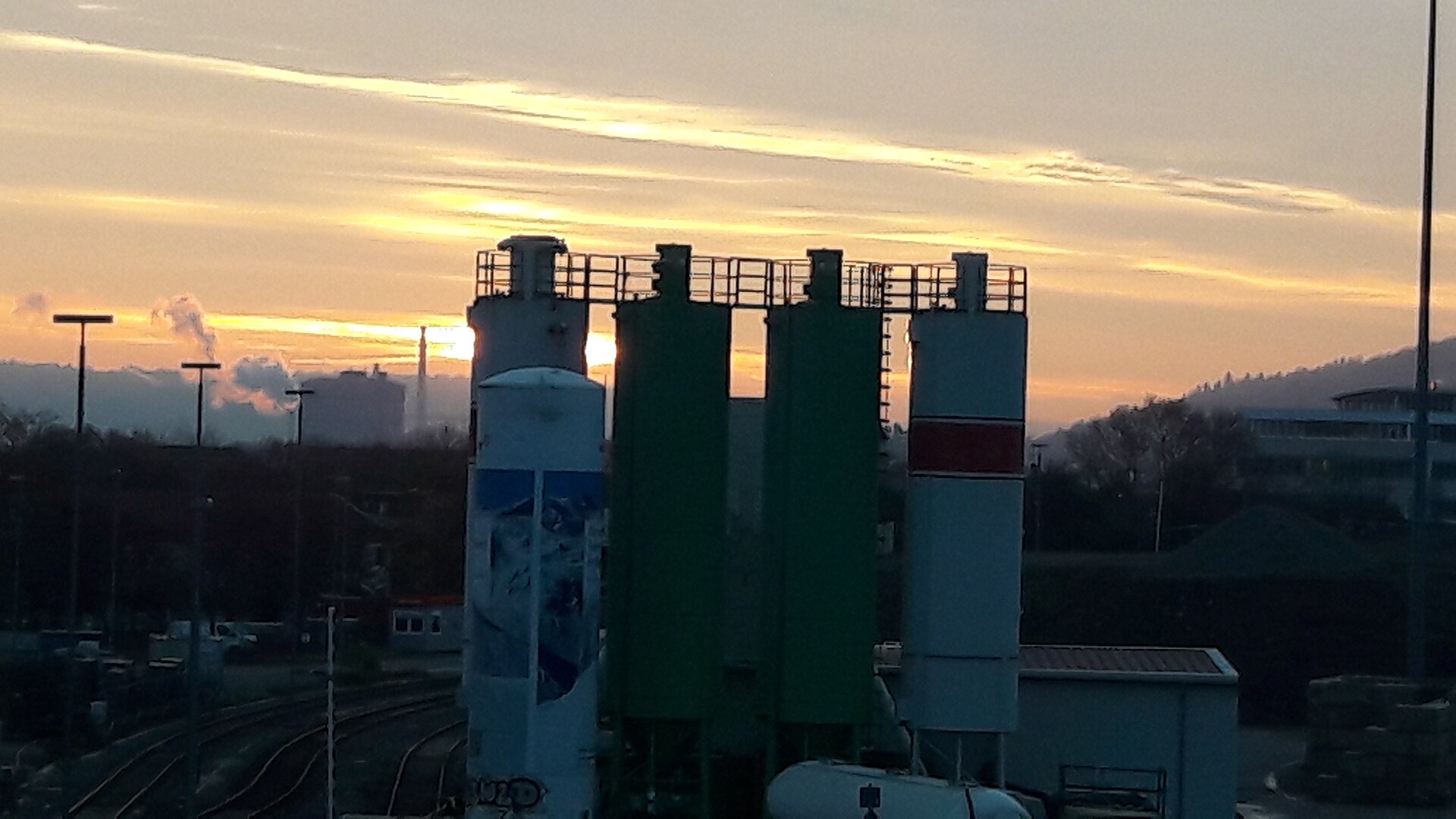
One sector, many layers
The region industrialised around vehicles and the machines that build them, and the layering is what makes it distinctive. Assembly plants sit above suppliers of complete systems, which sit above specialists in gears, valves, castings, sensors and electronics, which in turn depend on machine shops and toolmakers with a few dozen staff. Most of those firms are privately held, often family-controlled, and technically narrow by choice. The effect for a buyer is that almost any metal-cutting or drive-technology problem has a competent local answer, and that the answer arrives with process documentation and measurement evidence attached as a matter of course.
What the Mittelstand supplier base is good at
These firms are strongest where tolerance, repeatability and process capability decide the outcome: precision machining, hardening and grinding, gear cutting, hydraulic and pneumatic components, sensors and drive electronics. They are accustomed to automotive quality regimes, so IATF 16949 practice, part approval procedures and statistical process control are normal rather than exceptional. What they are less suited to is very high-mix prototype work at low prices, and to programmes wanting a supplier to carry development risk. Pricing reflects capability and rarely moves far, because most of these companies would rather lose an order than run a process they cannot document.
Training as infrastructure
The dual vocational system is not a background detail here; it is the mechanism that keeps the supplier base viable. Apprentices split time between a company and a vocational school, and the qualification that results is recognised across employers, so a machine operator or mechatronics technician arrives with a defined competence rather than an employer-specific one. Above that sits the master craftsman qualification, which supplies the shopfloor supervision layer that many countries lack entirely. The current strain is demographic and directional: fewer entrants, and a skills mix built for mechanical powertrains at a moment when demand is shifting toward electrical and software content.
A valley with no room and a river with limited draught
Physical constraint shapes industry here more than most places admit. The city occupies a basin with steep sides, so expansion happens up the valley and into surrounding districts rather than on adjacent land, and industrial plots inside the built-up area are scarce and heavily contested. The Neckar carries barge traffic to the Rhine and onward to the seaports, but the waterway is locked and size-limited, so it suits steady bulk and project cargo rather than containers on a schedule. Most freight therefore moves by road on corridors that are congested by design, since the terrain leaves few alternatives.
The transition risk a buyer should price in
A supplier whose products exist only because a combustion engine exists faces a demand curve that ends, and the region contains many such firms. Some have converted toward electrical drives, thermal management or components common to both architectures; others are running down profitable but terminal product lines. For a buyer, the diligence question is not financial strength today but product-portfolio exposure over the life of the programme being placed. Asking what share of a supplier revenue depends on powertrain-specific parts, and what it is doing about that, is more informative than another factory tour.
Industrial sectors present
- automotive
- automotive parts
- machine tool
- industrial equipment
- electrical equipment
- metal fabrication
- CNC machining
Frequently asked questions
- Why is precision machining capability so deep in this region?
- Because vehicle and machine-tool production demanded it for generations and the training system kept supplying people who could deliver it. Tight-tolerance turning, grinding, gear cutting and hardening became ordinary competences spread across hundreds of independent firms rather than capabilities locked inside a few large plants. That breadth is why a buyer can usually find several qualified sources for a difficult component, and why those sources expect drawings with proper tolerancing rather than an approximate description.
- How exposed are suppliers here to the shift away from combustion engines?
- Unevenly, and the variation is what matters. Firms making injection systems, exhaust components, transmission internals or engine castings face structurally declining demand, while firms making bearings, fasteners, structural parts, sensors, thermal components or electric drive elements do not, and some gain. Because many of these companies are private, exposure is not visible in published accounts. A buyer placing a long programme should ask directly about product mix and about the investment plan behind the answer.
- Does the inland port matter for a manufacturer here?
- For some cargo, yes. Barge services on the Neckar connect to the Rhine and from there to the North Sea ports, which suits heavy machinery, project shipments, steel and bulk inputs where transit time is flexible. Lock dimensions and water levels limit vessel size, so it is not a substitute for road or rail on time-critical flows. Machine builders shipping large assemblies abroad use it regularly; suppliers running sequenced deliveries to assembly plants do not.
Data limitations
- Manufacturing figures are operator-supplied inputs, not market data. GeoBusinessIQ holds no factory costs, production volumes, yields, cycle times, tooling prices or capacity data and does not estimate them — every result reflects only the figures you enter.
- No manufacturer, supplier, vendor or factory is recommended, rated or ranked anywhere in this cluster, and no directory of them is published. Selection material describes how to run your own assessment; the assessment itself remains yours.
Explore the graph
Industries present
- Automotive parts: a catalogue business that happens to own machines
- Electrical equipment makers: wound products, type tests and efficiency rules that rewrite catalogues
- Industrial equipment manufacturing: modular platforms and the slow bleed of option sprawl
- Machine tool manufacturing: cast iron, geometry, and a demand curve borrowed from your customers
- Sheet metal fabrication as a business: laser time, bend complexity and welded assemblies
- The CNC machining sector: job shops selling spindle hours against someone else's drawing
Sources
- Baden-Württemberg International — BW-i (accessed )Covers: The Baden-Württemberg state agency for international economic and scientific cooperation, covering regional industry.Does not cover: Site costs, incentive decisions, or company-level data.Why it matters: Cited on the Stuttgart hub page for regional industrial composition.Review cadence: annual
- German Federal Ministry for Economic Affairs and Climate Action — BMWK (accessed )Covers: German industrial, energy and economic policy, including industrial strategy and support programmes.Does not cover: Company-level data, site costs, or decisions on a specific application.Why it matters: The ministry that owns German industrial policy; cited for the German manufacturing environment.Review cadence: annual
- Eurostat — Eurostat — official statistics of the European Union (accessed ; reviewed )Covers: EU-harmonised VAT rates and economic statistics for EU/EEA member states.Why it matters: Used for EU VAT and member-state economic figures where an EU-harmonised series is preferable.
Educational and operational information only. This page describes an industrial location qualitatively; it publishes no output, employment, plant-count or ranking figures, names no individual manufacturer as a recommendation, and is not investment, siting, legal, or tax advice.
Last updated: