Shenzhen: hardware supply density on the Pearl River Delta
Shenzhen is the place buyers reach for when a product is mostly electronics and the schedule is short. Its value is not one factory but an unusually compressed supply layer: components, tooling, board assembly, moulding and enclosure finishing sit within an afternoon of each other. That compression is also its weakness, since costs have risen, land is scarce, and much routine assembly has already moved to neighbouring cities.
- Hub type
- industrial city
- Country
- China
- Location
- Shenzhen sits in southern Guangdong province on the eastern side of the Pearl River estuary, bordering Hong Kong, and was among the first Chinese cities designated a special economic zone.
- Logistics connections
- deep-water container terminals on the estuary, international cargo airport, cross-border road links to Hong Kong, high-speed and conventional rail to the interior, expressway network across the delta
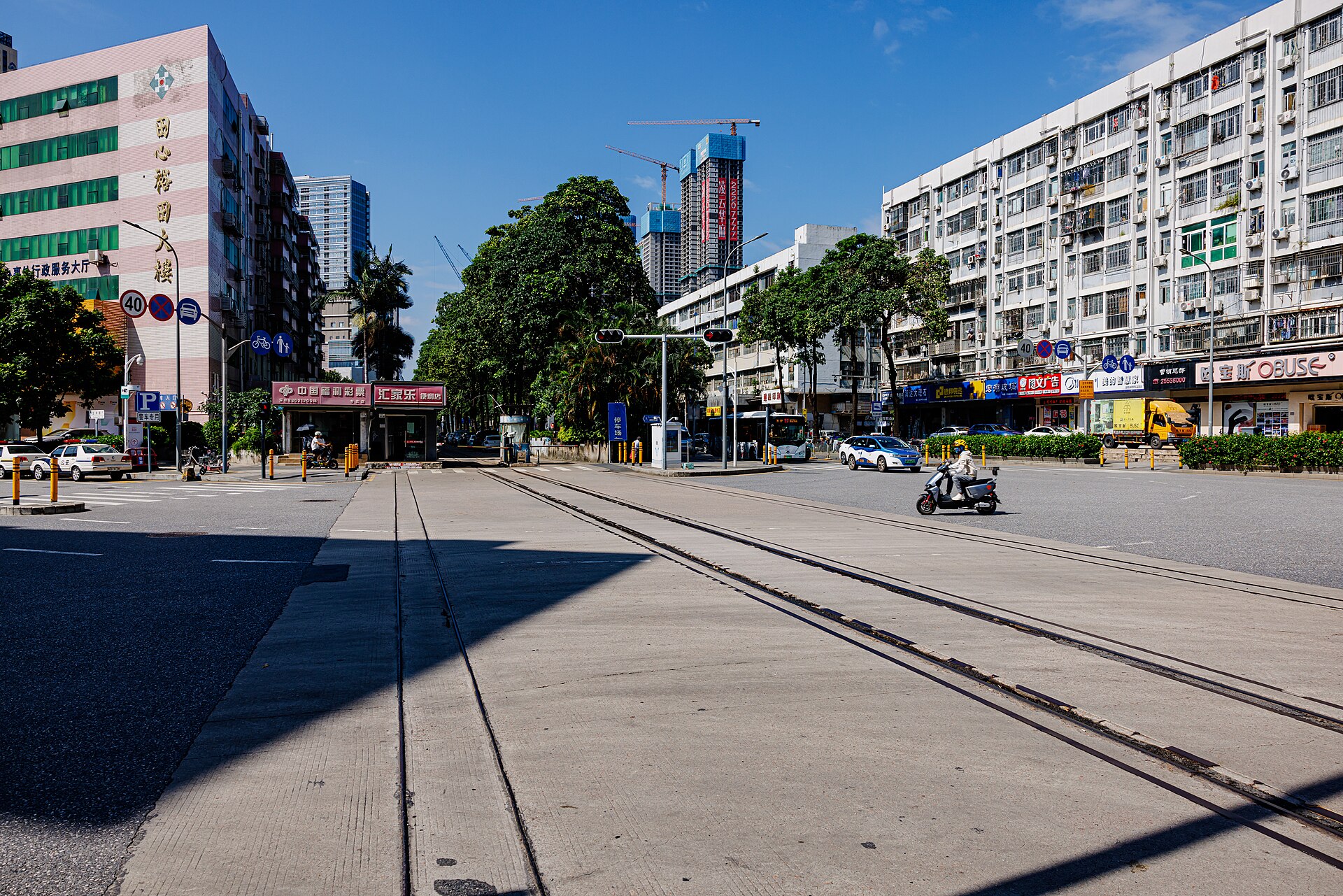
From processing zone to hardware design centre
Manufacturing arrived here as assembly work relocated from Hong Kong once the zone was opened to foreign investment, and for years the city did contract processing on imported components. What changed the character of the place was retention: as factories matured, design, tooling and component distribution grew alongside assembly instead of staying offshore. A firm can now specify a board, source parts, cut a mould and build a pilot batch without leaving the metropolitan area. That accumulation, rather than any single cost advantage, is what a buyer is actually paying for. It also explains why the city keeps electronics while lower-margin sewing, moulding and finishing work migrates outward.
What the component ecosystem actually gives a buyer
Component availability here is a trading function as much as a manufacturing one. Distributors and brokers hold parts that would otherwise carry long factory lead times, which lets an assembler start a run before a full reel allocation exists. That flexibility cuts both ways: the same channel can supply relabelled, remarked or out-of-specification parts, and a buyer who does not name approved sources in the contract is effectively delegating that choice. Incoming inspection, traceability on marking codes and a written approved-vendor list matter more here than in a market where every part arrives through an authorised distributor.
Engineering density and the cost of keeping it
The labour picture splits in two. Line operators are largely migrants, and turnover is high enough that any process depending on operator judgement rather than fixturing will drift. Hardware engineers, firmware developers and industrial designers are the scarcer resource, and they are concentrated here in a way that is hard to reproduce elsewhere in the region. Pay for that group has climbed steadily, which is why firms increasingly keep engineering and new-product introduction in the city while shifting steady-state volume production to lower-cost districts and provinces. Buyers should ask explicitly where their product will actually be built once it stabilises.
Land pressure and the outward drift of assembly
Industrial land inside the built-up area is genuinely constrained, and redevelopment pressure pushes older factory blocks toward offices and housing. The practical consequence for a customer is that a supplier registered address and its production address diverge more often than elsewhere. Multi-site arrangements are normal rather than suspicious, but they change what an audit has to cover: the site holding the certification is not always the site running the line. Utility supply is reliable by regional standards, though large power draws and effluent-generating processes are steered toward designated parks outside the core rather than accommodated in the city itself.
Where projects here typically go wrong
Two failure modes recur. The first is tooling ownership: moulds and fixtures paid for by a customer are frequently held by the supplier, and without a written transfer clause and physical marking, moving a programme becomes a negotiation rather than a decision. The second is design drift, where a supplier substitutes a component or a finish to hold a price, records nothing, and the change surfaces as a customer complaint. Both are contractual problems rather than manufacturing ones. A change-control clause, a documented first-article approval and a named engineering contact on the supplier side do more to protect an outcome than any amount of factory walking.
Industrial sectors present
- electronics assembly
- PCB
- electrical equipment
- plastics
- battery
- medical device
Frequently asked questions
- Why do so many electronics programmes still start in Shenzhen even when volume production moves elsewhere?
- Because the expensive part of a hardware programme is the iteration before volume, not the volume itself. Component samples, board houses, mould shops and assembly lines are close enough that a design change can be cut, built and tested within days rather than shipped between countries. Once a design is frozen and the bill of materials is stable, that proximity stops earning its cost, and firms commonly hold engineering here while moving steady-state build to a cheaper site.
- What does the component trading channel mean for quality control?
- It means part provenance is a decision you have to make rather than one the market makes for you. Brokered supply shortens lead times, but it also admits parts whose storage history and grade are unverified. Practically, that argues for naming approved sources in the purchase agreement, requiring traceable labelling on incoming reels, and sampling electrical parameters rather than trusting markings. Suppliers accustomed to export customers will already have this discipline; smaller shops usually will not unless asked.
- Is Shenzhen still a low-cost place to manufacture?
- Not in the sense that made it attractive originally. Labour, land and compliance costs have all risen, and routine assembly economics now favour inland provinces and other countries. What has held up is the value of the surrounding supply layer: short component lead times, dense tooling capacity and engineers who have built similar products before. Buyers who need that ecosystem still find the city competitive; buyers who only need hands on a line usually do not.
Data limitations
- Manufacturing figures are operator-supplied inputs, not market data. GeoBusinessIQ holds no factory costs, production volumes, yields, cycle times, tooling prices or capacity data and does not estimate them — every result reflects only the figures you enter.
- No manufacturer, supplier, vendor or factory is recommended, rated or ranked anywhere in this cluster, and no directory of them is published. Selection material describes how to run your own assessment; the assessment itself remains yours.
Explore the graph
Industries present
- Bare board fabrication: a chemical process sold by the panel
- Battery production: choosing which link of the chain to occupy
- Cell lines: coating quality propagates into everything downstream
- Contract board assembly: clear-to-build, line hours and the handover pack
- Electrical equipment makers: wound products, type tests and efficiency rules that rewrite catalogues
- Medical device manufacturing: design controls decide when you are allowed to sell
Sources
- National Bureau of Statistics of China — NBS China (accessed )Covers: Official Chinese statistics including industrial output and industry structure.Does not cover: Forecasts, company-level data, or plant-level figures.Why it matters: Cited as the official statistical authority for structural statements about Chinese industry.Review cadence: annual
- United Nations Industrial Development Organization — UNIDO (accessed )Covers: Industrial development analysis, industrial statistics methodology, and manufacturing capability programmes across member states.Does not cover: Company-level data, factory costs, supplier information, or real-time production statistics.Why it matters: The United Nations agency for industrial development; used for structural framing of how manufacturing sectors develop, never for point figures.Review cadence: annual
- World Bank — World Bank — open data and country profiles (accessed ; reviewed )Covers: Business-environment and company-formation indicators across economies.Does not cover: Current statutory tax rates, vendor availability, or provider-specific formation pricing.Why it matters: Used for formation-friction context in company-formation and startup-cost material.Review cadence: Annual data releases; re-checked each data review.
Educational and operational information only. This page describes an industrial location qualitatively; it publishes no output, employment, plant-count or ranking figures, names no individual manufacturer as a recommendation, and is not investment, siting, legal, or tax advice.
Last updated: