Frankfurt Rhine-Main: chemical parks, pharmaceuticals and air freight
Rhine-Main is best understood as an industrial region rather than a city economy. Chemical and pharmaceutical production occupies large permitted parks along the rivers, machinery and electrical manufacturing spread through the surrounding towns, and an exceptional air cargo capability sits in the middle of it. The combination suits manufacturers whose inputs arrive by water and pipeline and whose outputs leave by air, which is an unusual pairing to find in one place.
- Hub type
- industrial region
- Country
- Germany
- Location
- The Rhine-Main region centres on Frankfurt in the German state of Hesse, where the Main joins the Rhine, and extends into neighbouring parts of Rhineland-Palatinate and Bavaria.
- Logistics connections
- international airport with large dedicated air cargo capacity, Rhine and Main barge terminals with container and bulk handling, motorway crossroads linking the north-south and east-west corridors, rail freight junction on the national network, product pipelines serving the chemical parks
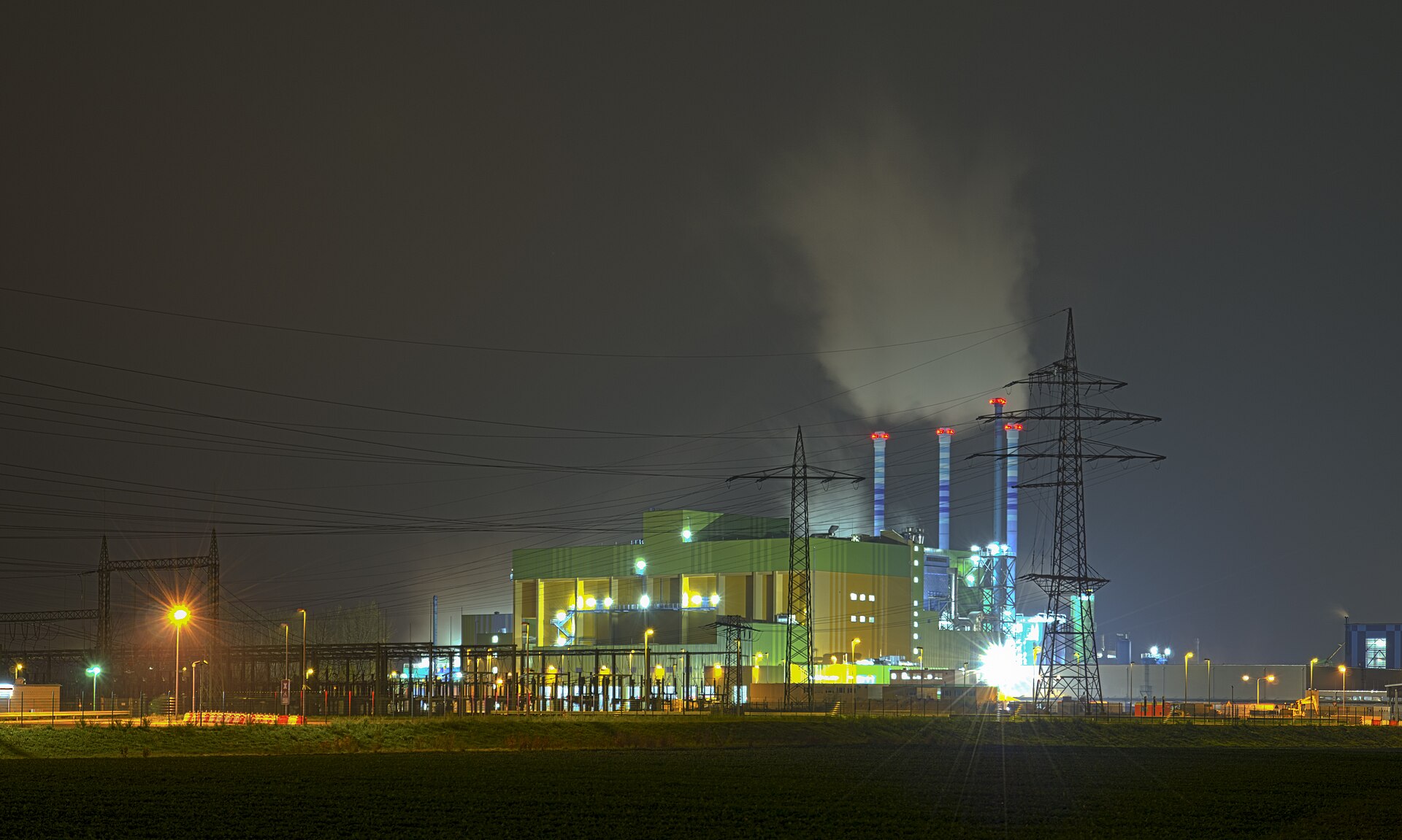
Rivers, parks and the shape of chemical production
Chemical manufacturing here sits inside operated industrial parks rather than on standalone plots. A park operator supplies steam, power, compressed gases, effluent treatment, fire response and permitting support, and tenants rent capability alongside land. That model matters commercially, because it lets a mid-sized speciality producer run a process that would be uneconomic to service alone, and it concentrates the permitting and safety expertise that heavy chemistry requires. It also creates dependency, since the operator sets utility terms and the site boundary defines what a tenant may do. Manufacturers evaluating the region are usually choosing between park tenancies rather than between greenfield plots.
Why pharmaceutical and speciality work concentrated
The pharmaceutical presence grew out of the same chemical estates and has stayed because the surrounding requirements are all local: qualified operators, analytical laboratories, validation and regulatory affairs staff, controlled-temperature logistics and an airport able to move product quickly under defined conditions. Fine and speciality chemistry benefits from the same infrastructure at smaller scale. What the region does not offer is cheap bulk production, since commodity chemistry has been migrating toward locations with advantaged feedstock for a long time. The work that remains is weighted toward high-value, tightly regulated, documentation-heavy production where proximity to expertise beats input cost.
Air cargo as a production input
For most manufacturing regions the airport is a convenience. Here it functions as an input. Temperature-controlled pharmaceutical handling, aerospace component movement, semiconductor and instrument shipments and urgent spare parts all depend on scheduled belly and freighter capacity, and the presence of forwarders, customs brokers and bonded warehousing around the airport makes complex consignments routine rather than exceptional. The constraint is night-flight restriction and slot availability, which shapes how time-critical flows are scheduled. Manufacturers whose products justify air freight locate here partly to avoid a road leg to a distant hub. Anyone whose goods travel by sea gains far less from the location.
A workforce built around process and regulation
The labour profile follows the sectors: process operators trained in chemical and pharmaceutical production, laboratory technicians, maintenance trades for continuous plant, and a large professional layer in quality, regulatory and environmental roles. Vocational qualifications specific to chemical production supply the shopfloor, and the parks themselves run training infrastructure. Competition for people comes less from other factories than from the regional service economy, which draws away administrative and analytical staff. Operator and technician recruitment is therefore manageable, while specialists in validation and regulatory work are contested and expensive. Shift working is normal in the process plants, which narrows the recruitment pool further.
What to check before taking space in a park
Park tenancy shifts several risks from the manufacturer to the operator and back again in ways worth reading carefully. Utility supply terms, effluent limits, shared safety obligations, expansion rights and the treatment of a tenant emissions within the site permit all sit in the agreement rather than in public regulation. Energy pricing deserves particular attention, since steam and power are supplied internally and the terms determine the cost base of an energy-intensive process. The other question is exit: what happens to installed plant, and to soil and groundwater obligations, when a lease ends.
Industrial sectors present
- chemicals
- specialty chemicals
- pharmaceutical
- machinery
- automotive parts
- electrical equipment
- printing
Frequently asked questions
- What is an operated chemical park and why does it matter?
- It is an industrial site where a central operator supplies utilities, effluent treatment, safety services and permitting support to multiple manufacturing tenants. It matters because heavy chemistry needs infrastructure that is uneconomic at single-plant scale, so a mid-sized producer can run a process it could not service alone. The trade-off is contractual dependency, since utility terms, site permit conditions and expansion rights are set by the operator and they shape a tenant cost base far more than rent does.
- Does the air cargo capacity benefit ordinary manufacturers or only pharmaceutical firms?
- It benefits anyone whose products or inputs justify flying. Instrument makers, aerospace suppliers, electronics firms and machine builders shipping urgent spares all use it, and so does anyone importing components under time pressure. Goods that move by sea gain little, since the region has no seaport and containers travel to the North Sea by barge or rail. The realistic test is value density: if air freight is a normal line in the cost model, the location earns its premium.
- How do goods reach seaports from this region?
- Mainly by barge on the Rhine and by rail. Container and bulk terminals on the rivers connect to the North Sea ports, and the barge leg is cheap, high-capacity and largely insulated from road congestion, though low water during dry periods can restrict loading. Rail handles time-sensitive and non-waterside flows. Road haulage to the coast is possible and common but is the least attractive of the three on cost for regular volume.
Data limitations
- Manufacturing figures are operator-supplied inputs, not market data. GeoBusinessIQ holds no factory costs, production volumes, yields, cycle times, tooling prices or capacity data and does not estimate them — every result reflects only the figures you enter.
- No manufacturer, supplier, vendor or factory is recommended, rated or ranked anywhere in this cluster, and no directory of them is published. Selection material describes how to run your own assessment; the assessment itself remains yours.
Explore the graph
Industries present
- Agricultural machinery manufacturing: building all year for a season that will not wait
- Automotive parts: a catalogue business that happens to own machines
- Commercial printing: makeready, overcapacity and the run-length crossover
- Commodity chemicals manufacturing: continuous plants, feedstock spreads and turnaround discipline
- Electrical equipment makers: wound products, type tests and efficiency rules that rewrite catalogues
- Machinery manufacturing: selling a promise, then financing it through milestones
Sources
- German Federal Ministry for Economic Affairs and Climate Action — BMWK (accessed )Covers: German industrial, energy and economic policy, including industrial strategy and support programmes.Does not cover: Company-level data, site costs, or decisions on a specific application.Why it matters: The ministry that owns German industrial policy; cited for the German manufacturing environment.Review cadence: annual
- German Federal Statistical Office — Destatis (accessed )Covers: Official German statistics including industrial production, producer prices and business demography.Does not cover: Forecasts, company-level data, or figures for a specific plant.Why it matters: Cited as the official statistical authority for structural statements about German industry.Review cadence: annual
- Eurostat — Eurostat — official statistics of the European Union (accessed ; reviewed )Covers: EU-harmonised VAT rates and economic statistics for EU/EEA member states.Why it matters: Used for EU VAT and member-state economic figures where an EU-harmonised series is preferable.
Educational and operational information only. This page describes an industrial location qualitatively; it publishes no output, employment, plant-count or ranking figures, names no individual manufacturer as a recommendation, and is not investment, siting, legal, or tax advice.
Last updated: